01
Identity
Who or what is acting?
Tenant-scoped subjects and workload identity establish the security boundary.
ELITZE connects discovery, identity, reachability, policy enforcement, runtime validation and evidence around the actions AI systems actually take.
Public pages never receive tenant-sensitive inventory or aggregate telemetry. Sign in to inspect the protected security graph.
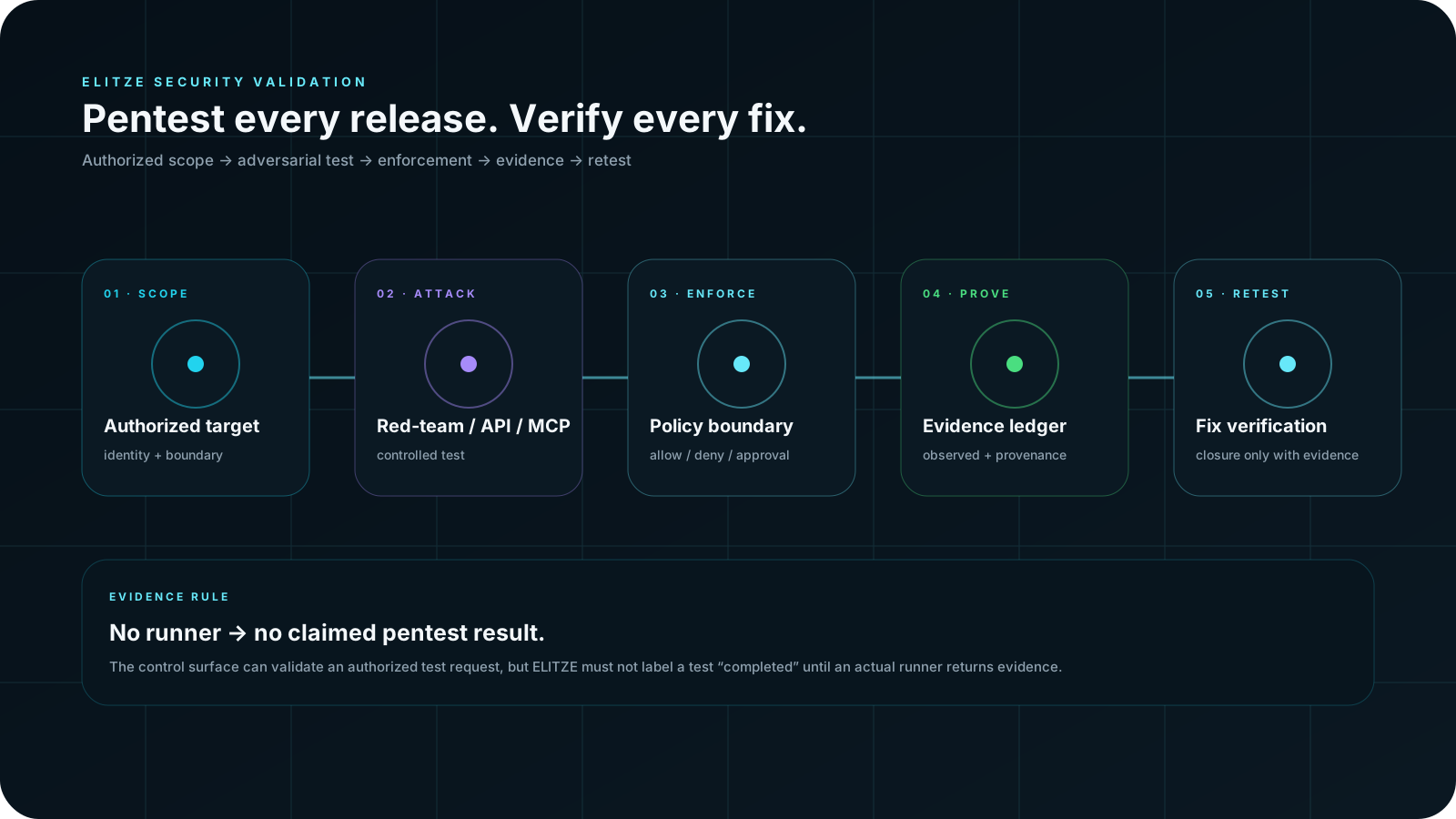
ELITZE now exposes the security validation path as a first-class product surface: authorized scope, adversarial testing, policy enforcement, evidence and retest.
ELITZE places identity, authorization and evidence outside the model so sensitive agent actions can be governed at the control boundary.
Tenant-scoped subjects and workload identity establish the security boundary.
Observed relationships connect agents to MCP, tools, APIs, secrets and protected data.
Sensitive actions are evaluated before crossing the execution boundary.
Observed results and retest evidence determine what ELITZE can state as fact.
Identify authorized agents, MCP surfaces, tools and workload identities.
Bring approved security and runtime sources into the control plane.
Capture source-bound inventory, decisions, runtime signals and provenance.
Apply identity, credential, data and execution boundaries.
Attach policy, ownership, approvals and operating constraints.
Evaluate sensitive actions at the authorized execution boundary.
Retest affected paths and verify remediation rather than trusting status alone.
Preserve auditable records that show what was observed and when.
REO, RIO/ROI and security posture remain source-bound. When the underlying record is missing, ELITZE exposes the missing state instead of creating a number.
The public surface explains the architecture. The acquisition surface documents what is included, what remains subject to diligence and how controlled source access works.